
Public health guidance touches everyday life more than people may realize. It shapes how professionals communicate with communities, how people understand the options available to them, and how families make choices.
But even the most credible information can lose impact if people can’t find it, understand it, or see how it connects to their lives.

For federal agencies and public health organizations, the challenge is rarely a lack of information. More often, the challenge is translation: turning research, policy, and national guidance into resources people can confidently use. Through Urban Emu’s integration into DCG, our team has seen this firsthand through work supporting national public health initiatives, including the U.S. Department of Agriculture’s (USDA) MyPlate awareness campaign and the 2020–2025 Dietary Guidelines for Americans.
Across these efforts, one lesson continues to stand out: public information works best when it is designed around the people who need to use it.
People-Centered Designs Used to Inform
People often turn to public health information because they are trying to answer a question, solve a problem, support someone else, or make a decision.

A parent may be planning meals on a tight budget. A health professional may be explaining nutrition guidance to patients. An educator may be creating resources for a classroom or community program. A partner organization may be looking for accurate, accessible materials to share with the people they serve.
Each audience may be using the same body of information, but they are coming to it with different needs. That’s why user-centered strategy matters.
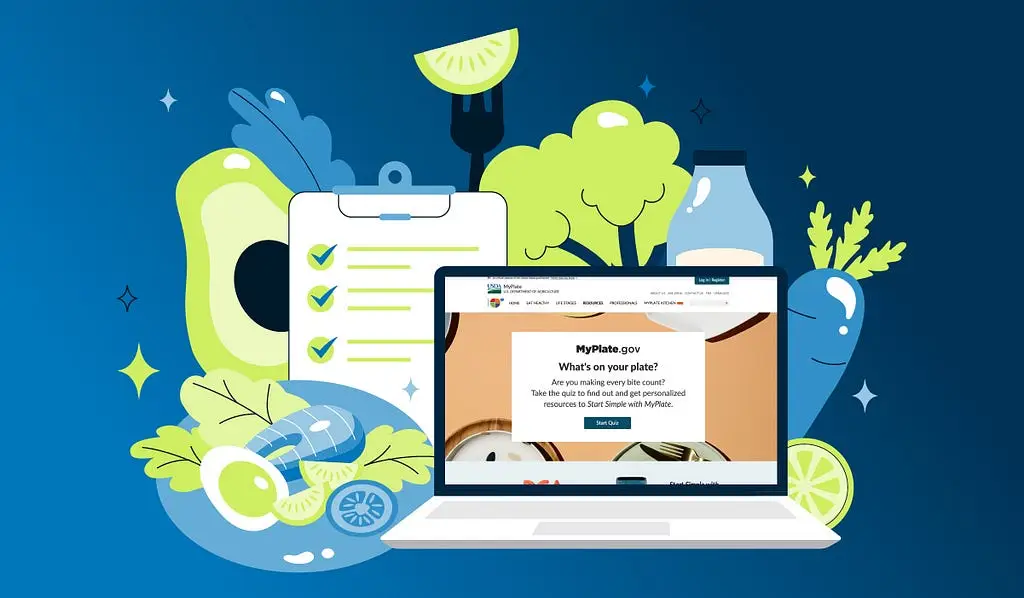
In our work supporting MyPlate awareness efforts, the strategy focused on helping audiences move from recognition to practical use. Rather than presenting MyPlate as general nutrition guidance, the campaign connected healthy eating information to real food choices, family routines, cultural traditions, and household realities.


That shift matters. Guidance becomes more meaningful when people can see how it applies to their own lives.
Making Complex Information Easier to Use
Public health guidance often must serve many audiences at once. It needs to maintain scientific credibility, support professional use, and still be clear enough to inform broader communication and education efforts.
The Dietary Guidelines for Americans are a strong example of that challenge. Released every five years by USDA and the Department of Health and Human Services (HHS), the Guidelines serve as a foundational resource for health professionals, educators, agencies, and organizations working to translate nutrition science into everyday guidance.
For the 2020–2025 edition, the work was not about simplifying the science. It was about making a 164-page federal resource easier to navigate, interpret, and apply.

Making information easier to use does not mean reducing its rigor. It means creating a structure that helps people move through complexity with more confidence. Clear organization, intuitive flow, visual tools, and companion resources can help audiences understand what matters, where to go next, and how to apply information in their own settings.
When content is organized around user needs, the experience becomes less about searching for information and more about understanding it.
Building Pathways from Awareness to Action
Awareness is an important first step, but it is not the final goal. For public health communication to make a difference, audiences need a clear path from recognition to use.
For MyPlate, broad campaign awareness was paired with practical resources that gave audiences a place to take the next step. A centralized Digital Hub made campaign materials easier to find and use. Culturally adapted MyPlate Plans helped to make nutrition guidance more relevant for diverse communities. Affordable recipes developed with food culture experts supported real-world application.
Together, these resources helped connect national nutrition guidance to everyday decisions.
The campaign reached audiences at scale, generating more than 221 million paid media impressions, more than 155 million video views, and 1.1 million ad clicks. It also helped drive more than 3 million unique visitors to the Digital Hub and increased national MyPlate awareness by 15 percentage points in less than nine months.

Those results point to a larger communications lesson: reach matters most when it connects people to resources they can actually use.
Agencies and public health organizations offer important information that can improve lives. But information alone does not create impact. Impact happens when people can access, understand, trust, and use it.
Making public health information easier to use requires careful attention to audience needs, content structure, accessibility, cultural relevance, and measurement. It requires teams to look beyond what needs to be said and focus on what audiences need to do.
For mission-driven organizations, this is the opportunity: not simply to publish information, but to create experiences that help people make informed decisions.
For organizations working to make complex public information more accessible and actionable, DCG brings together strategy, content, research, and digital expertise to help move mission-focused communication forward.
Making Public Health Guidance Easier to Find, Understand, and Use was originally published in DCG Life on Medium, where people are continuing the conversation by highlighting and responding to this story.